Sustainable and Eco-Friendly Formalwear in 2026: A Practical Guide to Smarter Occasion Dressing
Formalwear is designed for memorable moments: weddings, proms, graduations, religious ceremonies and family celebrations. Unfortunately, many occasion outfits spend far more time inside a wardrobe than they do being worn.
That makes formalwear an important part of the conversation about responsible fashion. The fashion and textile industry is associated with significant greenhouse-gas emissions, water use, chemical processing and textile waste, making thoughtful purchasing decisions increasingly important.
In 2026, choosing more sustainable formalwear is not simply about finding a garment labelled “eco-friendly”. It means considering the complete life of an outfit: what it is made from, how well it is constructed, how often it can be worn, how it should be cared for and what will happen to it when it is no longer needed.
Here is how families and individuals can make smarter formalwear choices without compromising on style.
- 1. What Does Sustainable Formalwear Really Mean?
- 2. Choose Formalwear That Can Be Worn Again
- 3. Prioritise Fit, Comfort and Adjustability
- 4. Build an Outfit from Reusable Pieces
- 5. Look Beyond Simplistic Fabric Claims
- 6. Understand What Certifications Actually Cover
- 7. Make Children’s Formalwear Work Harder
- 8. Choose Men’s Formalwear for Versatility
- 9. Coordinate Family Outfits Without Creating One-Use Wardrobes
- 10. Care for Formalwear Without Overcleaning It
- 11. Plan the Outfit’s Next Life
- 12. Is Sustainable Formalwear More Expensive?
- 13. Sustainable Formalwear FAQs
- 14. The Future of Formalwear Is About Better Use
What Does Sustainable Formalwear Really Mean?
There is no single fabric, suit or dress that is automatically sustainable.
An outfit made from a natural fibre may still require significant processing, dyeing or transportation. A recycled synthetic material may reduce demand for virgin resources but can still release microfibres. Even a well-certified garment can become wasteful if it is purchased for one event and never worn again.
A more useful way to assess formalwear is to consider several factors together:
- Whether the formalwear outfit is durable enough for repeated wear
- If its style can work for several occasions
- The garment fits comfortably and can be altered
- The material and environmental claims are clearly explained
- Whether it can be repaired, restyled, resold or passed on
- Whether the care requirements are realistic
For occasionwear in particular, the number of times a garment is worn can be just as important as the material on its label. Extending the active life of clothing can significantly reduce its overall environmental footprint.
Choose Formalwear That Can Be Worn Again

Before buying an outfit, consider the events it could be used for beyond the original occasion.
A navy, grey, beige or black suit can work for weddings, family celebrations, school events, graduations and formal dinners. A jacket can later be worn with chinos, while suit trousers can be paired with a shirt or knitwear.
This is particularly useful when shopping for children. Rather than choosing an extremely event-specific outfit, parents can explore versatile boys suits in classic colours and adaptable designs.
The same principle applies to dresses. A simple dress can be changed significantly with a different cardigan, bolero, sash, pair of shoes or hair accessory. When browsing girls occasion wear, consider whether the design will still feel appropriate for birthdays, parties, weddings or family photographs after the first event.
The most responsible outfit is often not the one with the most impressive environmental label. It is the one that fits well, lasts and is genuinely worn.
Prioritise Fit, Comfort and Adjustability
Poor fit is one of the quickest ways for formalwear to become unworn.
An uncomfortable waistband, restrictive jacket or dress that is difficult to move in can turn a beautiful outfit into a one-use purchase. This matters especially for children, who need to sit, walk, eat and play during long celebrations.
Take accurate measurements rather than relying only on age labels. Check the chest, waist, inside leg and overall length, and compare them with the relevant size guide. Features such as adjustable trouser waists can help improve comfort and accommodate a small amount of growth.
Avoid buying several sizes too large in the hope that an outfit will last longer. Oversized tailoring may look untidy, feel uncomfortable and remain unworn. A better strategy is to select the closest suitable fit and choose garments that can be altered where practical.
For adults, modest trousers, sleeve or waist adjustment can help a suit stay useful for years. When shopping for men’s suits, focus first on the fit across the shoulders and chest, as these areas are generally more complicated to alter than trouser length.
Build an Outfit from Reusable Pieces
Complete formalwear sets can offer convenience, but every part of the set should ideally have a purpose.
A formal shirt can be reused for school events, dinners and future celebrations. A waistcoat can be worn without the jacket for a less formal occasion. A tie or pocket square can refresh another outfit without requiring a completely new suit.
A practical children’s wardrobe might include one versatile suit, two boys formal shirts and a small selection of interchangeable accessories. A different shirt, tie or tie and hanky set can give the same suit a noticeably different appearance.
Adults can follow the same approach. A well-fitting suit worn with different men’s formal shirts, ties, shoes and pocket squares can cover multiple dress codes.
This reduces the temptation to buy an entirely new outfit for every invitation.
Look Beyond Simplistic Fabric Claims
Materials matter, but they should be considered carefully.
Linen and linen blends
Linen is valued for its breathable feel and is particularly suitable for summer celebrations. It can also create a more relaxed style that is easier to wear again after a wedding.
However, parents should still check the full fibre composition. Many garments described as linen-style or linen-blend contain other fibres that affect their feel, durability and care requirements.
For warm-weather events, SIRRI’s boys linen suits and men’s linen suits provide relevant options to compare. Review each product’s composition and care information rather than assuming every linen blend has the same environmental profile.


Organic natural fibres
Organic cotton and wool can offer benefits when their sourcing and processing are independently verified.
A vague “organic” description is less meaningful than a recognised certification with a verifiable licence or certification number.
Recycled fibres
Recycled polyester, nylon and other recycled inputs can reduce the demand for virgin raw materials. Nevertheless, “contains recycled material” does not explain how much recycled content is present or how it was verified.
Look for a specific percentage and recognised certification rather than relying on a green-coloured label or an undefined sustainability collection.
Lyocell, viscose and other wood-based fibres
Wood-derived fibres can include viscose, modal and lyocell. Their environmental impact depends partly on how the wood is sourced and how the fibre is processed.
The fibre name alone does not necessarily provide assurance about sourcing practices, so it is worth checking for additional information where available.
Synthetic fibres
Synthetic fibres are frequently used in formalwear because they can improve crease resistance, colour retention, strength and affordability. These qualities may help a garment remain presentable through multiple events.
The drawback is that synthetic textiles are generally fossil-fuel based and can release microfibres. Instead of treating every synthetic blend as automatically good or bad, consider whether it improves the garment’s useful life and whether the finished outfit will be worn regularly.
Understand What Certifications Actually Cover
Certifications are useful only when shoppers understand what they verify.
Different certifications focus on different aspects of a product, such as organic fibres, recycled content or testing for harmful substances.
These labels do not all mean the same thing. For example, a textile-safety certification should not automatically be interpreted as proof that an entire garment is sustainable.
When evaluating a claim, ask:
What has been certified?
Is it the raw fibre, fabric, factory or finished product?
How much of the garment is covered?
Does the claim refer to the entire outfit or only one component?
Who verified it?
Is the scheme independent and traceable?
Is the claim specific?
A measurable statement such as “made with 50% certified recycled polyester” is more useful than an unexplained “planet-friendly” badge.
Make Children’s Formalwear Work Harder
Children grow quickly, so extending the life of their formalwear requires planning.
Boys suits
Choose a colour and cut suitable for more than one occasion. A navy or grey suit may work for a wedding, communion, Eid celebration, school ceremony or family event.
Where the weather and dress code allow, lightweight suits and waistcoat combinations can be easier to restyle than highly traditional one-event outfits. Jackets, waistcoats and trousers should also be considered as individual wardrobe pieces rather than an inseparable set.
After the event, clean and store the outfit promptly so it remains suitable for another child. Keep spare buttons and note any minor repairs that are needed before putting it away.
Girls dresses
When selecting a dress, think about how easily its styling can be changed. Removable sashes, simple colours and versatile silhouettes can make repeat wear easier.
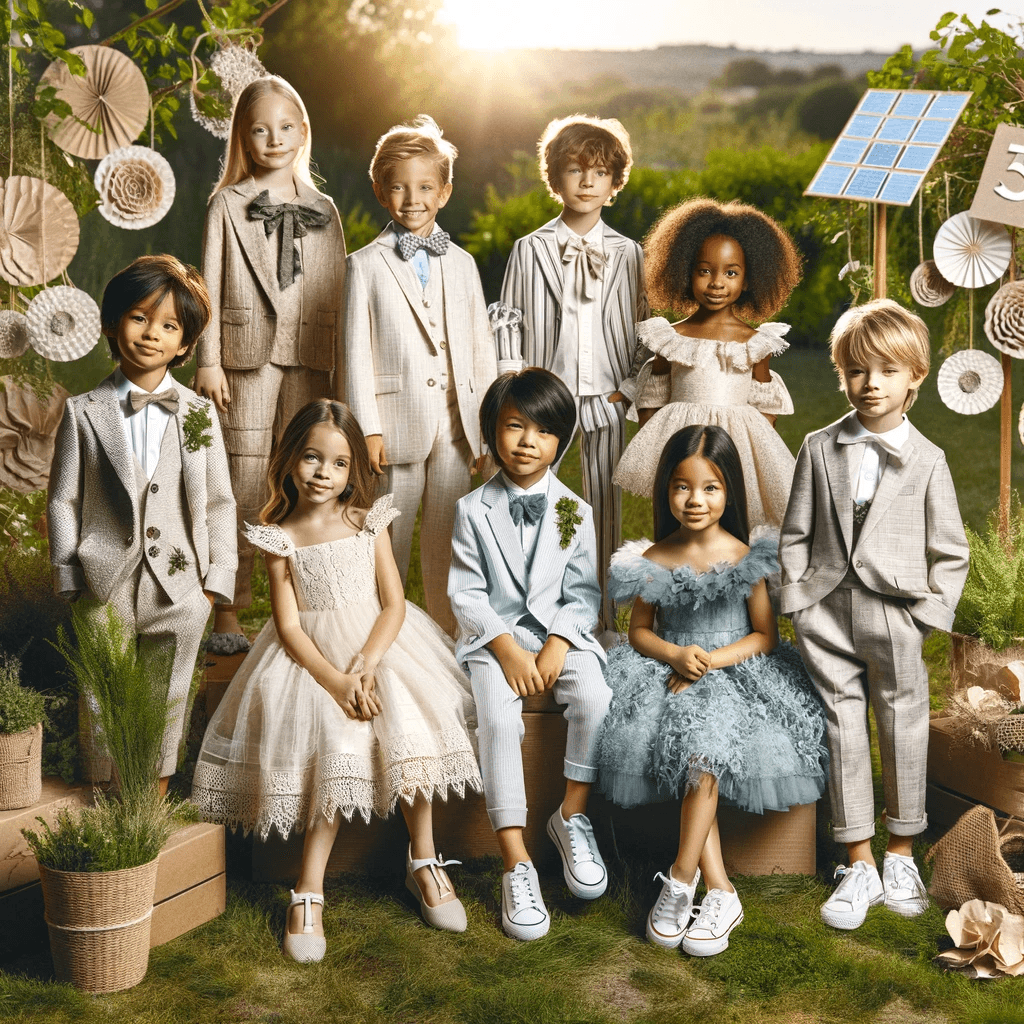
Highly decorative flower girl dresses may be purchased for a particular wedding, but they can often be reused for parties, photographs, religious celebrations or another family ceremony when restyled with different accessories.
Avoid storing pale dresses in direct sunlight or in damp spaces. Clean marks according to the care label before long-term storage, as untreated stains can become more difficult to remove.
Baby occasionwear
Babies may wear an occasion outfit for only a few hours before outgrowing it. For this reason, comfort, washability and the potential to pass the outfit on are particularly important.
Neutral colours and classic designs can make baby formalwear suitable for several events and easier to reuse within a family.
Choose Men’s Formalwear for Versatility
A versatile suit should not be limited to one wedding or formal dinner.
Navy, charcoal, mid-grey and some neutral-toned suits are generally easier to restyle than highly distinctive patterns. The jacket and trousers can often be worn separately, increasing the number of potential outfits.
Before buying, consider:
- Can the suit be worn in more than one season?
- Will the colour work with shirts and shoes already owned?
- Can the trousers or sleeves be altered?
- Is the fabric comfortable enough for a full day?
- Are replacement buttons supplied?
- Are the care instructions practical?
For a summer wedding, a lighter suit may be useful for future holidays, garden parties and warm-weather events. For business and year-round wear, a classic tailored suit may provide more opportunities for repeat use.
Coordinate Family Outfits Without Creating One-Use Wardrobes
Matching outfits can create a polished look for weddings, Eid celebrations and family photographs. They do not necessarily need to be identical from head to toe.
Choosing related colours, fabrics or accessories can produce a coordinated appearance while allowing each person’s outfit to be reused independently.
A father and son suit can provide coordinated tailoring for an important event. To improve its long-term usefulness, select a colour that both wearers can style separately afterwards. Matching ties or pocket squares can also achieve a family look without requiring two completely identical wardrobes.
Care for Formalwear Without Overcleaning It
Formalwear does not always need to be fully cleaned after a few hours of use.
Always follow the garment’s care label, but consider airing, brushing or spot-cleaning when appropriate. Excessive washing and unnecessary dry cleaning can shorten the life of some fabrics and finishes.
After wearing a suit:
- Empty the pockets and remove accessories.
- Hang the jacket on a supportive hanger.
- Allow the garment to air before placing it inside a wardrobe.
- Brush away surface dust and deal with small marks promptly.
- Steam carefully where the care instructions permit it.
- Store the suit in a breathable garment cover rather than tightly sealed plastic.
Dresses should be stored with enough space to prevent crushing. Delicate embellishments may need tissue protection, while heavy dresses may be better folded than hung for long periods.
Clean shoes, remove mud and allow them to dry naturally before storage. Keeping all parts of an outfit in good condition improves its resale, donation and hand-me-down potential.
Plan the Outfit’s Next Life
A formal outfit should not become rubbish simply because its original owner no longer needs it.
Good options include:
- Passing children’s clothing to younger relatives or friends
- Reselling garments while the style and condition remain current
- Donating clean, wearable pieces to a suitable charity
- Using a specialist alteration or repair service
- Restyling separates as part of less formal outfits
- Taking genuinely worn-out textiles to an appropriate textile collection point
Before passing an outfit on, check seams, buttons, zips and hems. Clean it, make simple repairs and keep matching accessories together. These small steps make it much more likely that the clothing will actually be worn again.
Is Sustainable Formalwear More Expensive?
Not necessarily.
Price alone does not prove that an outfit is durable, responsibly produced or environmentally preferable. A more useful measure is cost per wear.
A £100 suit worn once costs £100 per wear. A £150 suit worn ten times costs £15 per wear. A reasonably priced outfit that fits well and survives several occasions can be a better long-term choice than a costly garment bought for a single photograph.
Alterations, good care and thoughtful restyling can all improve value without requiring a larger wardrobe.
Sustainable Formalwear FAQs
What is the most sustainable formalwear material?
There is no universal answer. The impact depends on raw-material sourcing, manufacturing, dyeing, garment quality, transport, care and how long the item remains in use. Look for detailed composition information, recognised certification and a construction quality suitable for repeated wear.
Is linen always sustainable?
No. Linen can be breathable, durable and useful for warm-weather formalwear, but its overall impact depends on cultivation, processing, dyeing, garment construction and any fibres with which it is blended.
Are recycled polyester suits sustainable?
Recycled polyester can reduce demand for virgin polyester, but it remains a synthetic material and may still release microfibres. Look for a stated recycled percentage, credible certification and a garment durable enough for repeated use.
How can I make a child’s formal outfit more sustainable?
Select the right size, favour versatile colours, choose comfortable designs, reuse individual pieces, care for the outfit properly and pass it on while it remains in good condition.
Should I rent or buy formalwear?
Rental can make sense for highly specific outfits that are unlikely to be worn again. Buying may be more practical when a versatile garment will be used for several events. The better option depends on expected use, fit, alterations, transport and available rental services.
How can I avoid misleading environmental claims?
Be cautious with unexplained terms such as “green”, “conscious”, “planet-friendly” and “eco”. Look for precise information explaining the material, percentage, manufacturing stage and certification behind the claim.
The Future of Formalwear Is About Better Use
The future of sustainable formalwear will involve improved materials, greater supply-chain transparency, more credible product information and designs that are easier to repair and recycle. The industry is increasingly moving towards more durable and recyclable textiles, alongside better access to product information for consumers.
However, technology and regulation are only part of the answer.
For shoppers, one of the most effective changes is also one of the simplest: buy an outfit that fits, wear it more than once, care for it properly and give it another life when it is no longer needed.
Whether you are selecting a child’s first suit, a flower girl dress, a summer wedding outfit or new men’s tailoring, look beyond the first event. The smartest formalwear choice is one that continues to look good, feel comfortable and serve a purpose long after the photographs have been taken.