Slim Fit vs Tailored Fit vs Regular Fit Suits: What's the Difference?
Choosing the right men's suit isn't just about finding your size. The fit makes a noticeable difference to how a suit looks, how it feels and how comfortably you can wear it throughout the day. You might find two suits in the same size that look completely different once you try them on, simply because one is cut closer to the body while the other offers a little more room.
Slim fit, tailored fit and regular fit are three of the most familiar options when shopping for men's suits, but the differences aren't always obvious. Whether you're choosing a 3-piece suit for a wedding, updating your work wardrobe or buying something for a special occasion, understanding these fits will help you find a suit that looks smart without compromising on comfort.
- 1. What Is the Difference Between Slim, Regular and Tailored Fit Suits?
- 2. Tailored Fit vs Slim Fit: Key Differences
- 3. Tailored Fit vs Regular Fit Suits: Which Is Better?
- 4. What Is a Slim Fit Suit?
- 5. What Is a Tailored Fit Suit?
- 6. What Is a Regular Fit Suit?
- 7. How Do I Know If a Suit Fits Me Properly?
- 8. Can You Alter a Regular Fit Suit to Look More Tailored?
- 9. What Should You Consider Before Buying a Men's Suit?
- 10. Find Your Ideal Suit Fit at SIRRI
What Is the Difference Between Slim, Regular and Tailored Fit Suits?
The main difference between slim, tailored and regular fit suits is how closely they follow the shape of the body. Slim fit suits have a closer, more tapered cut, tailored fit suits provide a defined shape with slightly more room, and regular fit suits offer a more traditional silhouette with a more relaxed cut through the jacket and trousers.
Slim Fit vs Tailored Fit vs Regular Fit: At a Glance
Although all three fits can look equally smart, each creates a slightly different silhouette. The table below highlights the main differences, making it easier to compare the styles before looking more closely at the individual cuts.
| Feature | Slim Fit | Tailored Fit | Regular Fit |
| Overall cut | Close-fitting | Shaped with moderate room | Relaxed and traditional |
| Jacket shape | Narrow and closely tapered | Defined waist with a little extra room | Straighter cut with more space |
| Trouser shape | Slim and tapered | Gently tapered | Straighter and roomier |
| Room to move | Least generous of the three cuts | Balanced fit with more flexibility | Generally the most generous cut |
| Overall style | Modern and streamlined | Refined and versatile | Classic and traditional |
| Ideal preference | A close, sharp silhouette | A smart shape with added comfort | A traditional fit with extra room |
| Typical occasions | Weddings, proms and formal celebrations | Weddings, business and formal occasions | Business, ceremonies and classic formalwear |
Tailored Fit vs Slim Fit: Key Differences
Both tailored fit suits and slim fit suits offer a smart, shaped appearance, but the differences become more noticeable when you look at the jacket and trousers individually. If you're deciding between the two, the following comparison will help you understand which cut is more likely to suit your preferences.
| Feature | Slim Fit Suit | Tailored Fit Suit |
| Overall shape | Close-fitting with a narrow, streamlined silhouette | Shaped and defined with slightly more room |
| Jacket fit | Cut closer through the chest and waist | Follows the body with more ease through the chest and waist |
| Trouser fit | Narrower through the thighs and tapered towards the ankle | Neatly tapered with more room around the thighs |
| Comfort and movement | More close-fitting, so accurate sizing is especially important | Generally allows a little more freedom of movement |
| Appearance | Sharp, contemporary and streamlined | Smart, balanced and naturally structured |
| Popular occasions | Weddings, proms and modern formal events | Weddings, business meetings and everyday formalwear |
| Best choice if you prefer | A suit that follows the body's shape more closely | A defined silhouette without a particularly close fit |
The choice often comes down to how you want your suit to feel rather than which style looks smarter. A slim fit can work beautifully when the proportions are right, while a tailored fit offers a similar sense of structure with a little more breathing room. Neither should pull across the buttons or restrict normal movement.
Tailored Fit vs Regular Fit Suits: Which Is Better?
Tailored fit and regular fit suits can look quite similar when hanging on a rail, but the difference becomes clearer when you put them on. A tailored fit suit is generally more shaped through the waist, with trousers that taper towards the ankle. A regular fit suit has a straighter, roomier cut through the body and legs, creating a more traditional appearance without the same degree of shaping.
A tailored fit is often a good choice if you prefer a defined silhouette but don't want anything as close-fitting as a slim suit. Regular fit, on the other hand, may appeal to men who prefer a little extra room through the chest, stomach or thighs, or simply enjoy a more classic style of tailoring. A regular fit shouldn't look oversized when the size is correct, just as a tailored fit shouldn't feel tight. Both can look equally polished when the shoulders, jacket length and trouser proportions are right.
What Is a Slim Fit Suit?
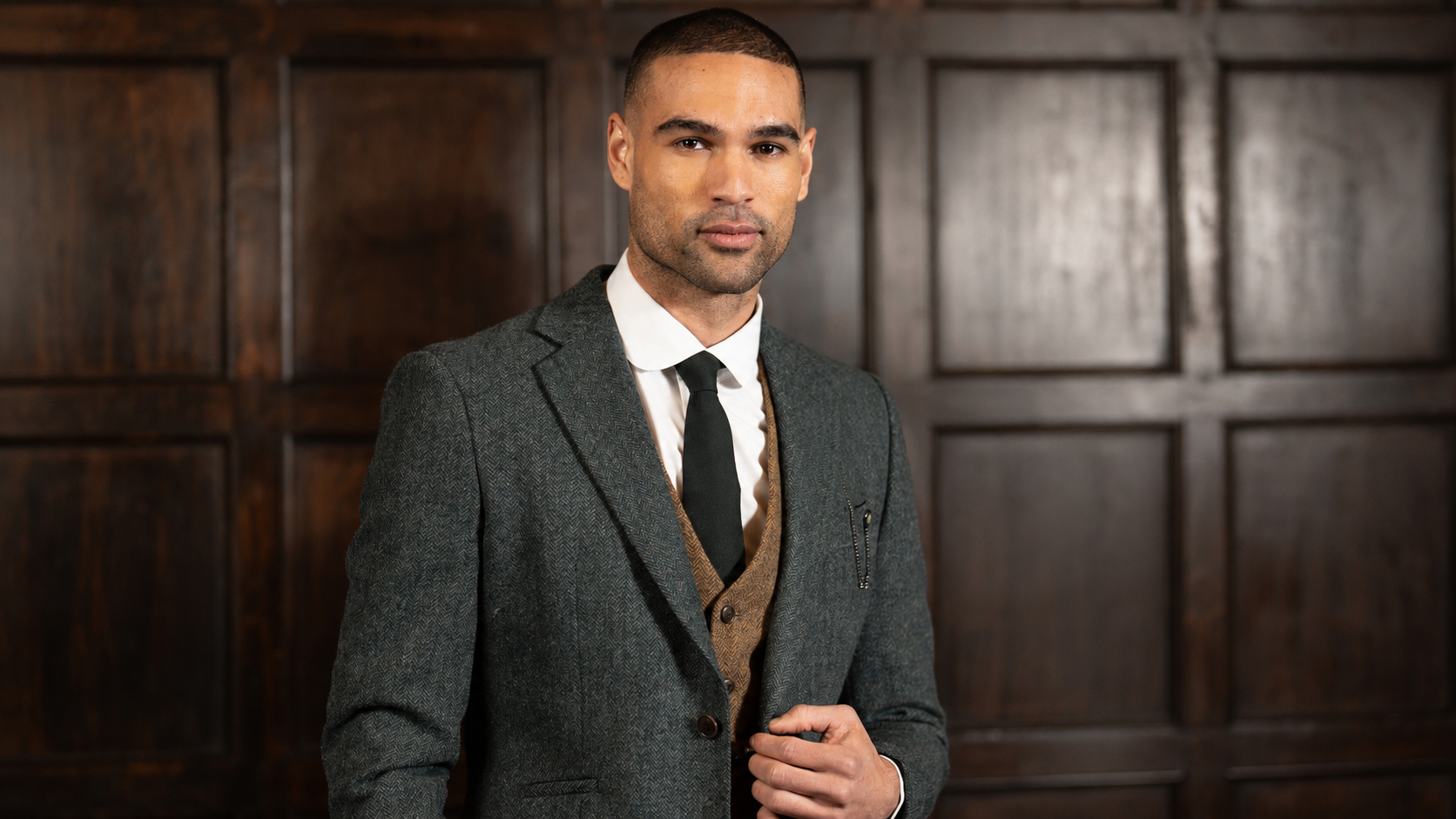
A slim fit suit is designed to sit closer to the body, with a shaped jacket, a fitted waist and trousers that gradually narrow towards the ankle. This cut creates a clean, contemporary appearance and is particularly popular for weddings, proms, parties and other occasions where a sharper silhouette is preferred. Slim fit suits are available in everything from classic plain fabrics to checks, tweed-inspired styles and modern three-piece designs.
Despite the name, you don't need to have a particularly slim build to wear a slim fit suit. What matters is whether the cut works with your proportions. The jacket should fasten without pulling across the chest or stomach, and the trousers should allow you to sit and move comfortably. If the fabric strains around the buttons or feels tight across your thighs, trying a different size or fit is usually a better solution than accepting an uncomfortable suit. You can explore different colours and styles in our men's slim fit suits collection.


What Is a Tailored Fit Suit?
A tailored fit suit sits between slim fit and regular fit, offering a shaped appearance with slightly more room through the jacket and trousers. The waist is generally defined rather than straight, while the trousers provide a neat line without fitting too closely around the legs. This balance makes tailored fit a versatile option for men who want a refined look that feels comfortable enough for a full day at work, a wedding or a formal celebration.
One thing worth understanding is that a tailored fit suit isn't necessarily made to your individual measurements. The term usually describes the cut of a ready-to-wear suit, whereas bespoke or made-to-measure tailoring involves creating or adjusting a garment around a person's measurements. You can still have small alterations made to a tailored fit suit, but the original cut is designed to provide a smart, balanced shape straight from the collection. Browse our men's tailored fit suits to see how this style works across different designs.


What Is a Regular Fit Suit?
A regular fit suit has a more traditional cut, with additional room through the chest, waist, hips and trousers. Rather than following the body as closely as a slim or tailored fit, it creates a straighter silhouette that many men find comfortable for everyday formalwear. Regular fit suits are particularly suitable for those who prefer classic tailoring or don't enjoy the feeling of closely fitted clothing.
It's important not to confuse regular fit with a suit that's too large. Even with a roomier cut, the jacket should sit properly on your shoulders, the collar should rest neatly against your shirt and the trousers shouldn't gather excessively around the legs. When these details are right, a regular fit can look just as elegant as a more tapered suit. The difference is simply that it offers a more relaxed shape rather than emphasising the outline of the body.
How Do I Know If a Suit Fits Me Properly?
Regardless of whether you choose slim, tailored or regular fit, there are a few details worth checking when trying on a suit. Start with the shoulders, as these are one of the most important areas to get right. The jacket should follow your natural shoulder line without extending too far beyond it or pulling tightly across the upper back. When you fasten the front button, the fabric should lie reasonably smoothly across your chest and waist without creating pronounced tension lines.
The sleeves should generally finish around the wrist, allowing a small amount of shirt cuff to show, depending on your preferred style. The jacket collar should sit comfortably against the back of your neck, while the trousers should fit securely at the waist without relying on a tightly fastened belt. Check the fit around your seat and thighs by sitting down as well as standing, and look at how the trouser hem falls over your shoes. A slight break or a cleaner, shorter finish can both work, depending on the cut of the suit and the look you're trying to achieve.
It's also worth trying the suit with the shirt and shoes you intend to wear. A jacket that looks comfortable over a thin T-shirt might feel different over a formal shirt and waistcoat, particularly if you are choosing a three-piece suit. Taking a moment to check these details can save you from choosing a suit that looks good for a few minutes but becomes uncomfortable during a long event.

Can You Alter a Regular Fit Suit to Look More Tailored?
If you find a suit you like but want a slightly more fitted appearance, some alterations can help improve its shape. A tailor may be able to take in the jacket waist, shorten the sleeves or taper the trousers to create a neater silhouette. These changes can be particularly useful when a suit fits well across the shoulders but feels a little too generous elsewhere.
However, alterations have their limits, and not every regular fit suit can be turned into a slim fit. Changing the shoulders, armholes or overall jacket structure can be complicated and expensive, so it's usually better to start with a suit that's already close to the fit you want. If you regularly find slim fit too restrictive and regular fit too loose, trying a tailored fit suit before arranging alterations may be the simpler solution.
What Should You Consider Before Buying a Men's Suit?
Once you've decided which fit feels right, think about where and how often you'll wear the suit. For a versatile formal wardrobe, navy, charcoal and grey are practical colours that can be styled for work, weddings and other occasions. A classic two-piece suit is easy to wear in different settings, while a three-piece suit with a matching waistcoat offers a more dressed-up option for special events. Checks, tweed textures and lighter seasonal fabrics can also add character when the occasion allows.
Fabric and construction are just as important as the cut. A lightweight material may feel more comfortable at a summer wedding, while a heavier fabric can be better suited to cooler weather. Before ordering online, check the individual product's size guide and fit description rather than assuming your usual jacket or trouser size will be identical across every style. It is always worth choosing a suit that fits well from the start, even if you plan to make small alterations afterwards.
Find Your Ideal Suit Fit at SIRRI
At SIRRI, we understand that choosing a suit is about more than following a particular style. Whether you prefer the sharper outline of a slim fit, the balanced proportions of a tailored fit or the traditional comfort of a regular fit, the aim is to find something that feels right and looks the part for your occasion.
Explore our men's suits collection to compare slim, tailored and regular fit options in a range of colours, fabrics and designs. From smart business suits to wedding-ready three-piece styles, you can narrow your choice by fit, size and occasion, then complete the look with a formal shirt, smart shoes and carefully chosen accessories. The right suit is one that you can wear with confidence, without having to think about the fit every time you move.
For more styling tips and exclusive updates,
follow us on TikTok and Instagram
@sirriuk